

Poor indoor air quality monitoring is one of the most overlooked problems in commercial buildings today. Most teams don’t think about it until something feels off. People start getting tired faster. Meetings feel longer than they should. Complaints begin to show up, but no one can quite explain why. In most commercial buildings, air quality is treated as a background function. As long as the temperature is comfortable, everything is assumed to be working. In practice, that assumption hides poor ventilation, uneven airflow, and rising CO₂ levels that directly affect how people work.
At first, it does not seem like a major issue. After all, the building looks fine. The temperature feels acceptable. Systems appear to be running as expected. However, indoor air conditions often tell a different story. In reality, poor indoor air quality does not just affect comfort. It directly influences how people think, how systems respond, and how efficiently a business operates. Instead, it builds up slowly and starts impacting multiple areas at once.
Whether you manage an office, a hospital, a commercial complex, or an industrial facility, indoor air quality plays a much bigger role than most people realize. And when it is not monitored properly, the cost is far higher than it appears on the surface.
What Is Poor Indoor Air Quality in Commercial Buildings?
Indoor air quality is often misunderstood because it cannot be judged visually or by temperature alone. Indoor air quality refers to the condition of air within enclosed spaces. In commercial buildings, this includes offices, healthcare facilities, industrial environments, and public infrastructure. Most people assume poor air quality is easy to identify. They expect visible dust, strong odors, or obvious discomfort. However, that is rarely the case.
In many situations, air quality issues are completely invisible. They develop gradually and often go unnoticed until they begin to affect people. For example, carbon dioxide levels tend to rise in spaces with high occupancy and limited ventilation. This happens frequently in meeting rooms, conference halls, and open offices. At the same time, volatile organic compounds, commonly known as VOCs, may build up due to furniture, paints, cleaning agents, or building materials. These compounds affect how fresh or stale a space feels.
Fine particulate matter, such as PM2.5 and PM10, can also remain suspended in the air. These particles are especially common in urban environments or areas near industrial activity.
Humidity and temperature add another layer of complexity. Too much humidity creates a heavy and uncomfortable environment, while low humidity can cause dryness. Even when air is clean, poor humidity levels can make a space feel unpleasant.
Airflow is another critical factor. In many buildings, air distribution is uneven. Some areas receive proper ventilation, while others remain stagnant. In short, poor indoor air quality is not caused by a single issue. It is the result of multiple factors that are not properly monitored or balanced.
How Poor Indoor Air Quality Monitoring Affects Productivity, Health, and Business Costs
Indoor air quality has a direct impact on how a business performs. However, the effects are often subtle, which makes them easy to ignore.
Reduced Productivity and Focus
One of the first areas affected by poor indoor air quality is productivity. When CO₂ levels rise and ventilation drops, people begin to feel tired. Concentration decreases, and tasks take longer to complete. In many offices, this happens daily without anyone realizing it. Employees may assume they are simply having a slow day, but the environment plays a bigger role than expected. Over time, even a small drop in productivity adds up. Across teams and departments, this translates into significant operational inefficiency.
Even a small drop in focus across a large workforce translates into measurable business loss. However, most organizations do not connect that loss back to air quality.
Increased Discomfort and Workplace Complaints
Poor air quality often leads to discomfort. Employees may experience headaches, irritation, or a constant feeling of fatigue. These symptoms may not be severe, but they are persistent. As a result, complaints increase. Facility teams begin receiving feedback about temperature, airflow, or general discomfort. However, without proper data, identifying the root cause becomes difficult.
This is where most buildings struggle. Adjustments are made based on guesswork rather than actual conditions.
Impact on Health and Well-being
Clean air plays a fundamental role in how people feel throughout the day. When air quality is poor, even simple tasks can feel more exhausting. In environments such as hospitals, laboratories, or controlled facilities, the importance of air quality becomes even more critical. Here, it is not just about comfort but also about safety and reliability.
Customer and Visitor Experience
Indoor air quality also affects how visitors perceive a space. This is particularly important in commercial environments such as hotels, retail stores, and corporate offices. If a space feels stuffy or uncomfortable, people notice immediately. They may not always identify the exact problem, but the experience feels off. Over time, this can affect brand perception and customer satisfaction.
HVAC Inefficiency and Rising Costs
Many businesses assume their HVAC systems are functioning properly. However, without proper monitoring, systems often operate inefficiently. In some cases, buildings over-ventilate, which increases energy consumption. In other cases, under-ventilation leads to poor air quality. Without real-time data, HVAC systems often operate either too aggressively or not enough. Both scenarios increase cost without improving actual conditions.
The Hidden Cost of Not Monitoring Indoor Air Quality
The biggest challenge with indoor air quality is not just the issue itself. It is the lack of visibility. Most buildings do not actively track air quality parameters. Instead, they rely on assumptions. They assume systems are working correctly. They assume the environment is comfortable.
However, without data, these assumptions are rarely accurate. This leads to hidden costs. Productivity losses remain unnoticed. Energy inefficiencies go unchecked. Maintenance becomes reactive instead of proactive.
For example, In a typical meeting room, CO₂ levels can rise significantly within 30–45 minutes of continuous occupancy. The room still feels “fine,” but energy levels drop and discussions lose effectiveness. Situations like this happen every day. And without monitoring, they continue indefinitely. The challenge is not that businesses ignore air quality. It is that they assume it is already under control.
Why Most Buildings Get Indoor Air Quality Monitoring Wrong
Most buildings are designed for average conditions, but they operate in constantly changing conditions. This is where most buildings go wrong. Many facilities rely on basic HVAC settings and assume that maintaining temperature is enough. If the room feels cool or warm as expected, everything is considered under control. However, temperature alone does not define air quality. In reality, indoor air conditions are far more complex. A space can feel comfortable in terms of temperature while still having poor ventilation, high CO₂ levels, or elevated particulate matter. These factors do not always produce immediate discomfort, which is why they often go unnoticed.
Another common issue is the lack of continuous monitoring. Some buildings conduct periodic checks or rely on manual inspections. While this may provide occasional insights, it does not capture real-time fluctuations. Indoor environments change throughout the day depending on occupancy, usage, and external conditions.
In addition, many facilities operate HVAC systems on fixed schedules rather than actual demand. This leads to either over-ventilation or under-ventilation. Both scenarios are inefficient and costly. When decisions are made without actual data, systems drift away from optimal performance over time.
Which Indoor Air Quality Parameters Should You Monitor?
Effective indoor air quality monitoring requires a multi-parameter approach. Each parameter provides a different insight into the environment.
Carbon Dioxide (CO₂)
CO₂ is one of the simplest indicators of ventilation quality. When it rises, it usually means fresh air supply is not keeping up with occupancy.
Volatile Organic Compounds (VOC)
VOC levels often reflect what is happening inside the space — materials, cleaning activity, or chemical presence.
Particulate Matter (PM2.5 and PM10)
Fine particles are a major contributor to poor air quality. They are especially relevant in urban and industrial areas.
Monitoring particulate levels helps improve air cleanliness.
Carbon Monoxide and Other Gases
Certain environments require monitoring of specific gases. This is critical in areas connected to parking or industrial processes.
Temperature and Humidity
Temperature and humidity influence comfort and perceived air quality. Balanced levels create a more stable environment.
Integrated Monitoring Approach
Modern systems combine multiple sensors into one platform. This provides a complete view of indoor conditions.
How Indoor Air Quality Monitoring Helps Businesses Take Control
The biggest shift happens when teams stop reacting to complaints and start responding to data
Once businesses begin monitoring indoor air quality, they gain control over their environment.
Real-time data allows facility teams to see exactly what is happening. Instead of reacting to complaints, they can identify issues early and respond quickly.
For instance, if CO₂ levels rise in a meeting room, ventilation can be adjusted immediately. If particulate levels increase, corrective action can be taken without delay.
Over time, data helps optimize HVAC performance. Systems can be fine-tuned based on actual usage and conditions.
This not only improves comfort but also reduces energy consumption.
From Reactive Management to Data-Driven Decisions
For a long time, indoor air quality has been managed reactively.
A complaint is raised. Someone checks the system. Adjustments are made. Then the issue disappears temporarily. This cycle repeats itself without addressing the root cause.
However, modern facilities are shifting towards a more data-driven approach.
When real-time monitoring systems are in place, decisions are no longer based on guesswork. Facility teams can see trends, patterns, and variations across different zones.
For instance, if a particular area consistently shows higher CO₂ levels during peak hours, ventilation can be adjusted specifically for that zone. Similarly, if particulate levels rise during certain times of the day, corrective measures can be. This level of control changes how buildings are managed on a daily basis.
Why Indoor Air Quality Is Becoming a Priority in Modern Buildings
Indoor air quality is no longer just a technical consideration. It is becoming a strategic priority.
Several factors are driving this shift.
First, there is increased awareness. People are more conscious of their surroundings and expect better indoor environments. This is especially true in workplaces, healthcare facilities, and public infrastructure.
Second, building standards are evolving. Modern building designs focus on sustainability, energy efficiency, and occupant well-being. Air quality monitoring plays a key role in achieving these goals.
Third, businesses are recognizing the link between environment and performance. Comfortable and healthy spaces lead to better outcomes, whether it is employee productivity or customer satisfaction.
In addition, smart building technologies are becoming more common. These systems rely on data to optimize performance. Without accurate air quality data, optimization remains incomplete.
As a result, indoor air quality is moving from a secondary concern to a core component of building management.
In many new projects, indoor air quality is no longer treated as an optional upgrade. It is becoming a baseline expectation.
Omicrons Sensing Solutions: How We Help Optimize Indoor Air Quality
Once the need for real-time monitoring is clear, the next question is practical – what kind of sensing setup actually helps teams measure and act on indoor air conditions?
Omicron offers a comprehensive range of sensing solutions designed specifically for HVAC systems, commercial buildings, and industrial environments. These products work together to provide complete visibility and control over indoor air conditions.
Below are key Omicron products that support advanced air quality monitoring.
1. Indoor Air Quality (IAQ) Monitor
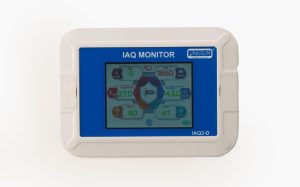
Omicron’s Indoor Air Quality Monitor is designed to provide a complete view of indoor environmental conditions by measuring multiple parameters in a single device.
Key Parameters Measured
- Carbon Dioxide (CO₂)
- Temperature
- Relative Humidity
- Total Volatile Organic Compounds (TVOC)
- Particulate Matter (PM2.5 / PM10)
- Optional gas parameters such as CO, NO₂, and O₃
Features
- Multi-parameter sensing in a single unit
- Real-time monitoring for continuous visibility
- Wall-mounted design for ambient air measurement
- Digital display options for on-site monitoring
- High accuracy sensors for reliable readings
Technical Highlights
- Output: Modbus / Modbus TCP-IP (for BMS integration)
- Wide measurement range for different indoor environments
- Fast response time for dynamic air quality changes
- Long-term sensor stability with minimal drift
Application
- Commercial offices
- Hospitals and healthcare facilities
- Smart buildings
- Educational institutions
This device is ideal for spaces where multiple air quality parameters need to be monitored simultaneously without installing separate sensors.
2. CO₂ Transmitter (Duct / Ambient Type)
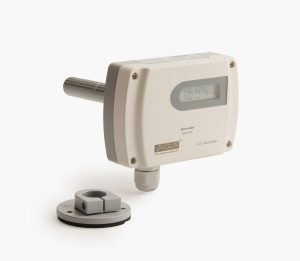
The CO₂ transmitter is one of the most critical components in indoor air quality monitoring. It helps measure ventilation effectiveness and occupancy levels.
Key Function
- Measures carbon dioxide concentration in indoor environments
Features
- Available in both duct-mounted and wall-mounted configurations
- High accuracy sensing for reliable CO₂ measurement
- Designed for HVAC integration
- Low maintenance operation
Technical Highlights
- Measurement range: typically up to 5000 ppm
- Output: Analog (4–20 mA / 0–10 V) and Modbus communication
- Fast response for real-time ventilation control
- Stable NDIR sensing technology
Application
- Office buildings
- Conference rooms
- Commercial complexes
- HVAC systems
CO₂ transmitters play a key role in demand-controlled ventilation, helping reduce energy consumption while maintaining comfort.
3. VOC / Gas Transmitter
 Omicron’s gas transmitters are designed to detect volatile organic compounds and other gases that affect indoor air quality.
Key Parameters
- Total VOC (TVOC)
- Carbon Monoxide (CO)<//li>
- Hydrogen (H₂)
- Other toxic or combustible gases
Features
- Continuous gas detection for safety and air quality
- Compact design for flexible installation
- Suitable for industrial and commercial environments
- High sensitivity for early detection
Technical Highlights
- Multiple sensing technologies depending on gas type
- Analog and digital output options
- Fast detection and response time
- Long operational life
Application
-
- Parking areas
- Industrial facilities
- Laboratories
- Enclosed commercial spaces
These sensors help identify invisible pollutants that directly impact comfort and safety.
4. RH & Temperature Transmitter
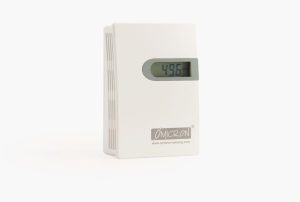
Temperature and humidity play a crucial role in maintaining indoor comfort and perceived air quality.
Key Parameters
- Relative Humidity (RH)
- Temperature
Features
- High accuracy measurement
- table long-term performance
- Available in duct and ambient configurations
- Compact and robust design
Technical Highlights
- Output: Analog and Modbus communication
- Wide operating range for different environments
- Fast response to environmental changes
- Reliable sensing elements for consistent readings
Application
- HVAC systems
- Cleanrooms
- Commercial buildings
- Industrial environments
These transmitters ensure that indoor conditions remain balanced and comfortable.
5. Air Velocity Transmitter / Air Flow Measurement Station
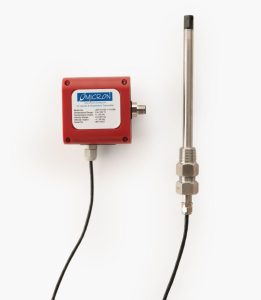
Airflow is a critical component of indoor air quality, as it directly affects ventilation and air distribution.
Key Function
- Measures air velocity and airflow in ducts
Features
- Accurate airflow measurement for HVAC optimization
- Designed for duct installation
- Helps validate ventilation performance
- Durable construction for long-term use
Technical Highlights
- Suitable for low and high air velocity ranges
- Analog and digital outputs
- High measurement accuracy
- Stable performance in varying airflow conditions
Application
- HVAC ducts
- Air handling units
- Cleanrooms
- Industrial ventilation systems
These sensors help ensure that air is distributed effectively across all areas.
6. Wireless Transmitters (Optional Integration)
For existing buildings or retrofit projects, wireless monitoring provides a practical solution.
Features
- Wireless data transmission
- Easy installation without extensive wiring
- Flexible deployment across multiple zones
- Scalable for large facilities
Technical Highlights
- Reliable communication protocols
- Battery-powered or low-power operation
- Integration with central monitoring systems
Application
- Retrofit projects
- Large commercial buildings
- Multi-zone monitoring
Wireless solutions allow businesses to expand monitoring capabilities without infrastructure limitations.
Omicron Sensing Solutions: Your Best Foot Forward For Healthy AQI
Omicron sensing solutions provide a complete, real-time approach to managing indoor air quality through integrated, high-accuracy sensors. Their Indoor Air Quality (IAQ) Monitors measure CO₂, temperature, humidity, VOCs, and particulate matter in a single unit, giving full environmental visibility. Complementing this, CO₂ transmitters with NDIR technology enable demand-based ventilation, while VOC and gas transmitters detect invisible pollutants early. Airflow and RH transmitters further ensure balanced ventilation and comfort. With Modbus/BMS integration and real-time outputs, Omicron systems allow facilities to move from reactive adjustments to precise, data-driven air quality control.
Frequently Asked Questions
What causes poor indoor air quality?
Poor indoor air quality is caused by inadequate ventilation, pollutant buildup, and imbalanced temperature or humidity.
How does indoor air quality affect productivity?
High CO₂ levels and poor ventilation reduce focus, increase fatigue, and impact overall performance.
Why does a room feel uncomfortable even when the temperature is correct?
Because temperature alone does not define air quality. Poor ventilation, high CO₂, or humidity imbalance can still make the space uncomfortable.
What sensors are used for indoor air quality monitoring?
Common sensors include CO₂ sensors, VOC sensors, particulate monitors, and temperature and humidity transmitters.
How can businesses improve indoor air quality?
By improving ventilation, monitoring key parameters, maintaining HVAC systems, and using real-time sensing solutions.
Conclusion
Indoor air quality directly impacts how your building performs – from productivity and comfort to energy efficiency.
Most businesses overlook it because the effects are gradual, not immediate. However, the cost builds over time.
With the right monitoring, you gain visibility, respond faster, and create healthier, more efficient spaces.
If you’re not measuring it, you’re guessing.
Connect with Omicron to explore smarter air quality monitoring solutions for your facility.
